When a pressure washer starts but will not stay running, the cause may be restricted water flow, trapped air, a clogged nozzle, an electrical issue, overheating, or a fuel problem on a gas model.
Start with the quick diagnosis below, then follow the electric or gas troubleshooting section for your machine. Checking the simplest external causes first can often solve the problem without unnecessary disassembly or replacement parts.
Why Won't My Pressure Washer Stay Running?
Using a pressure washer is usually straightforward until the machine starts and then suddenly stops. When that happens in the middle of a cleaning job, the cause may be as simple as restricted water flow or a clogged filter, but it can also involve the fuel system on a gas model or the electrical supply on an electric pressure washer.
Knowing what to check first can save time and help you avoid replacing parts unnecessarily. The right troubleshooting path depends on which type of pressure washer you own, so begin with the quick checks below and then move to the section that matches your machine.
Quick Checks Before You Start
|
What Happens |
Likely Area |
Check First |
|
Electric motor stops after releasing the trigger |
May be normal total-stop operation |
Pull the trigger again and see whether the motor restarts. |
|
Electric washer starts and then dies |
Water flow, power supply, trapped air, or heat |
Check the tap, hose, inlet filter, outlet, and nozzle. |
|
Gas engine starts and stalls |
Fuel, air, exhaust, or carburetor |
Check fresh fuel, filters, the fuel-cap vent, and spark arrestor. |
|
Pressure rises and falls |
Restricted water or a clogged nozzle |
Straighten the hose, purge air, and clean the nozzle. |
Before checking any component, turn the pressure washer off. Unplug an electric model or let a gas engine cool, shut off the water, and squeeze the spray-gun trigger to release stored pressure. Only inspect parts that the owner's manual identifies as user-serviceable.
Why a Pressure Washer Starts and Then Stops
A pressure washer may start and die because water cannot move through the system correctly, the machine is not receiving enough power, the motor is overheating, or a filter or nozzle is blocked. Gas pressure washers can also stall because of restricted fuel or airflow, a blocked spark arrestor, a faulty fuel-cap vent, or deposits in the carburetor.
Electric and gas pressure washers stop running for different reasons. Start with the section for your machine before cleaning or replacing any parts.
When Repair or Replacement Makes More Sense
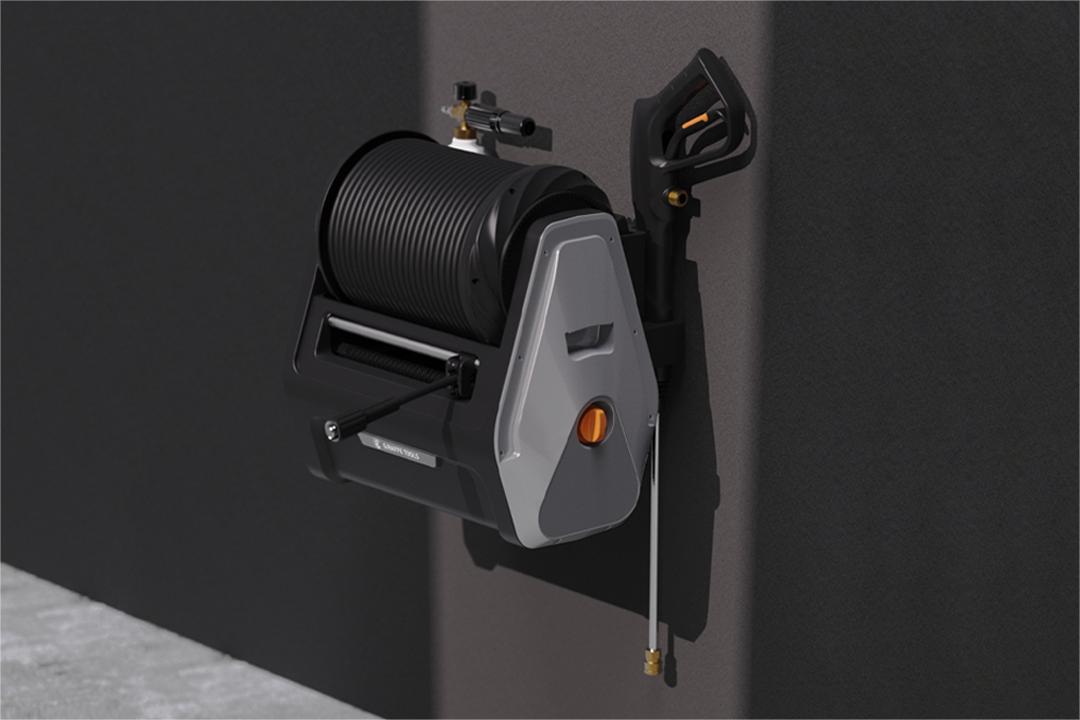
Many shutdown problems can be resolved with the checks below. However, if an older portable unit stops repeatedly, has damaged electrical components, or requires a repair that is not user-serviceable, replacement may be more practical than repeated troubleshooting. For frequent cleaning of driveways, garage floors, siding, and vehicles, the Grandfalls Retractable Pressure Washer Pro provides a wall-mounted setup with a 100 ft auto-retracting hose, keeping the main unit in place while providing reach around the home. Readers with lighter cleaning needs can compare other models in the retractable pressure washer collection. If the issue appears minor, continue with the troubleshooting steps for your machine type.
How to Troubleshoot an Electric Pressure Washer That Starts and Then Dies
Electric pressure washers do not use a fuel filter, spark arrestor, or carburetor. When an electric model starts and then stops, the cause is more likely to be restricted water flow, trapped air, a clogged nozzle, an inadequate electrical supply, or activated thermal protection.
Confirm That It Is Not Normal Total-Stop Operation
Many electric pressure washers stop the motor when the spray-gun trigger is released and restart it when the trigger is pulled. If the motor restarts and pressure remains steady, this may be normal operation rather than a fault. Continue troubleshooting when the motor fails to restart, stops while you are spraying, or repeatedly cycles with the trigger held.
Check the Water Supply and Inlet Filter
Turn the tap fully on and inspect the garden hose for kinks, leaks, tight bends, or blockage. Confirm that the hose length and diameter meet the requirements for your model. Then turn the water off, disconnect the hose, and rinse the inlet screen or filter if the manual allows it. Restricted flow can make the pressure pulse and may cause the machine to stop under load.
Purge Air and Inspect the Nozzle
With the motor switched off and the water supply on, hold the spray-gun trigger until water flows steadily without sputtering. This helps purge air from the pump and hose. Next, release pressure and inspect the nozzle. Rinse away debris and use only the manufacturer-approved cleaning tool.
A blocked or mismatched spray tip can affect pressure throughout the system. Use the pressure washer nozzle guide to check which nozzle suits the surface and cleaning task.
Check the Outlet, GFCI, and Extension Cord
Unplug the washer before inspecting the cord and plug. Test the outlet, reset the GFCI when applicable, and check the home's breaker. Whenever possible, connect the pressure washer directly to a properly grounded outlet. If the manufacturer allows an extension cord, use an outdoor-rated cord with the correct gauge and length. An undersized or damaged cord can cause voltage drop, heat, humming, and shutdown.
Allow the Motor to Cool
If the pressure washer runs for several minutes and then stops, overheating may have activated its protective system. Turn the machine off, unplug it, and let it cool for the period specified in the manual. Before restarting, make sure ventilation is clear and correct any water-flow or electrical problem that may have increased the load on the motor.
How to Troubleshoot a Gas Pressure Washer That Starts and Then Dies
Check When the Gas Engine Stalls
The timing of the shutdown helps narrow the cause before you remove any parts. A gas engine that runs for only a few seconds often has a fuel-delivery or choke-transition problem. If it stalls when the spray-gun trigger is released, pressure may not be entering bypass mode correctly; that points to the unloader or pump and is better handled by a qualified service provider. If it runs for several minutes before stopping, check the fuel-cap vent, engine temperature, oil level, and the maintenance items specified in the engine manual.
Before moving deeper into the fuel system, confirm that the choke is in the correct running position, the engine has the specified amount of clean oil, and the spark-plug lead is secure. These quick checks help separate a simple setup or maintenance issue from a filter, carburetor, or pump problem.
How to Troubleshoot the Spark Arrestor
A spark arrestor can collect soot over time. When the buildup becomes heavy, it restricts exhaust flow and may cause a gas pressure washer to run poorly or stall. Let the engine cool completely, locate the spark arrestor according to the owner's manual, and clean it with an appropriate brush. If cleaning does not restore normal operation or the part is damaged, replace it with a compatible part.
How to Troubleshoot the Fuel Filter
This step applies only to gasoline pressure washers. The fuel filter keeps residue from reaching the engine, but accumulated debris can eventually restrict fuel flow. Check the maintenance interval in the manual, inspect the filter, and replace it when necessary. If the fuel is old or contaminated, drain and replace it safely rather than returning it to the tank.
How to Troubleshoot the Air Filter
A clogged air filter prevents the engine from receiving the airflow needed for the correct fuel mixture. Remove the filter as directed in the manual and check it for dust, oil, or damage. Clean a reusable filter using the approved method or replace a disposable filter. Do not run the engine without the filter installed.
How to Troubleshoot the Carburetor
If the pressure washer was stored with fuel for a long period, deposits may form in the carburetor. Possible signs include repeated stalling, rough operation, black exhaust smoke, popping sounds, or fuel leakage. Because these symptoms can have more than one cause, complete the basic fuel and air-filter checks before assuming the carburetor is responsible.
Carburetor work involves fuel and small internal components. If the owner's manual does not provide a user-serviceable procedure, arrange professional cleaning rather than dismantling it. Before seasonal storage, use the manufacturer-recommended winterizing process to reduce future fuel-system problems.
How to Troubleshoot the Fuel Cap
A blocked vent in the fuel cap can create a vacuum in the tank and interrupt fuel flow. Inspect the cap and vent for dirt or damage and clean them according to the manual. Replace the cap if the vent remains blocked or if the seal is damaged. Avoid operating the machine with a loose cap because fuel may spill during use.
When to Stop Troubleshooting
Stop using the pressure washer if the cord or plug becomes unusually hot, there is a burning smell, the machine leaks from its casing, the circuit repeatedly trips, or the motor continues to hum without starting. These symptoms should be handled by the manufacturer or a qualified service provider rather than repeated home testing.
How to Reduce Future Shutdown Problems
Before each cleaning job, straighten the supply and high-pressure hoses, confirm steady water flow, purge air, and install the correct nozzle. After use, switch the machine off, close the water supply, squeeze the trigger to release pressure, and drain or winterize the unit as directed in the manual.
Frequently Asked Questions
Why does my pressure washer start and then shut off?
Check whether the behavior is normal total-stop operation. If it is not, common causes include low water flow, trapped air, a blocked nozzle or inlet filter, inadequate voltage, overheating, or a fuel-system restriction on a gas model.
Can low water pressure make a pressure washer stop?
Yes. A partially closed tap, kinked hose, clogged inlet screen, or supply hose that is too narrow can restrict flow. The pump may surge, lose pressure, or stop under load when it is not receiving enough water.
Why does my electric pressure washer hum but not start?
Residual pressure or low voltage may prevent startup. Switch the unit off, release pressure with the trigger, and use a suitable grounded outlet. Stop testing if the motor continues to hum or the circuit trips.
How long should I let an overheated pressure washer cool?
Follow the cooling period in the owner's manual because it varies by model. Keep the unit switched off and unplugged while it cools, then check water flow, ventilation, and the electrical supply before restarting.
Final Thoughts
When a pressure washer will not stay running, avoid jumping straight to an internal repair. First identify whether the machine is electric or gas, then check the external conditions that match that system. Water flow, filters, air in the pump, the nozzle, power supply, and overheating account for many electric pressure washer problems, while gas models also require attention to fuel, airflow, the spark arrestor, fuel-cap vent, and carburetor.


