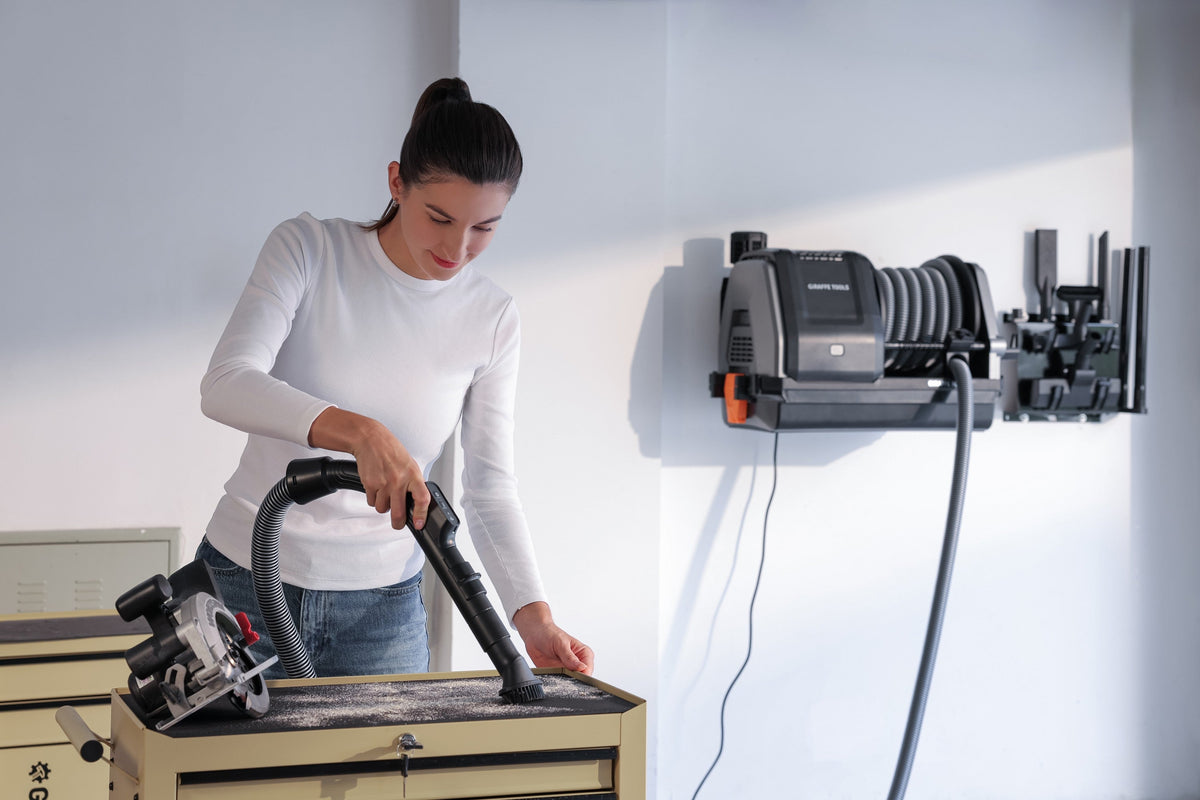
Vacuum cleaner maintenance keeps suction strong and protects the motor. Empty the bin before it packs tight, keep filters clean, clear the hose, dry wet-use parts, and inspect the cord and wall mount. A short routine after each cleanup prevents most airflow problems and helps a retractable vacuum stay ready for the next job.
Why Does Regular Vacuum Cleaner Maintenance Matter?
A vacuum depends on unrestricted airflow. As the bin fills or dust coats the filter, the motor must work harder to move air through the machine. Suction drops first; extra heat, noise, and premature wear can follow. Routine care also keeps fine dust from leaking back into the garage and helps wet/dry components stay sanitary.
Maintenance matters even more in garages and workshops, where sawdust, tracked-in grit, pet hair, vehicle debris, and occasional spills can enter the same machine. A garage vacuum designed for strong airflow and wet/dry pickup can handle those mixed jobs, but it still needs a clear hose, clean filters, and an emptied bin to deliver consistent performance.

What Should You Do After Every Cleaning Session?
Empty the Bin Before Debris Packs Tight
Unplug the vacuum, release the latches, and empty the dustbin before it becomes tightly packed. Do not wait for debris to reach the inlet or filter. Fine dust and pet hair can restrict airflow before the bin looks completely full. Wipe the rim and sealing surfaces so the lid closes evenly without grit breaking the seal.
Check the Hose and Nozzles While Debris Is Easy to Remove
Disconnect the working nozzle and look through the opening for paper, leaves, hair, wood chips, or other material that can lodge at a bend. Clear the attachment, check the hose cuff, and inspect accessible joints. Removing a small blockage now is easier than tracing a full loss of suction later.
Dry Every Part Used for Wet Pickup
After collecting liquid, empty and rinse the bin as directed by the manual, then let the bin, liquid filter, hose, and wet nozzle dry completely before storage. Never leave dirty water sealed inside the machine. It can create odors, coat the hose, and encourage microbial growth. Reinstall the correct dry-use filters only after every component is dry.
How Often Should You Clean Filters and Airflow Parts?
Clean the Filter According to Its Type
A washable filter may be gently cleaned only when the manufacturer permits it. Let it air-dry completely before reinstalling it; a damp filter restricts airflow and traps dirt quickly. Do not wash a disposable filter or use aggressive brushing that can open the media. Replace any filter that stays clogged, smells musty, or shows tears, crushed pleats, or a damaged seal.
When filtration no longer returns to normal after approved cleaning, install a compatible replacement HEPA filter rather than continuing to run the vacuum with damaged media. Match the filter to the vacuum model and never operate the machine with a required filter removed.
Use a Simple Maintenance Schedule
The right interval changes with debris load, so use this schedule as a practical starting point and shorten it for pet hair, drywall dust, sawdust, or frequent wet pickup.
|
When |
Maintenance task |
Why it matters |
|
After each use |
Empty the bin; inspect the nozzle and hose opening |
Prevents packed debris and early clogs |
|
After wet pickup |
Drain, rinse as allowed, and dry wet-use parts |
Prevents odors and residue |
|
Monthly |
Inspect hose cuffs, seals, cord, plug, brackets, and reel action |
Catches wear before it becomes unsafe |
|
Every 3-6 months |
Inspect filters and clean only washable media |
Maintains airflow under typical home use |
|
As needed |
Replace damaged filters, seals, hoses, or nozzles |
Restores performance without improvised repairs |
How Do You Clear and Protect a Retractable Vacuum Hose?
Clear a Clog Without Puncturing the Hose
Turn the vacuum off and unplug it before disconnecting the hose where the manual allows. Start at the nozzle and cuffs, since clogs often form at narrow transitions. Use a blunt, flexible cleaning tool and work from the nearest opening. Do not force screwdrivers, sharp rods, or high heat through the hose; a puncture or deformed liner creates a permanent air leak.
Guide the Hose Back Instead of Letting It Snap
Pull the hose in line with the reel, avoid dragging it across sharp edges, and do not extend it beyond its stop. After cleaning, give the hose the release motion specified by the manual and guide it as it rewinds. If retraction becomes uneven, first check for twists, debris on the hose, or an obstructed guide rather than repeatedly yanking it.
For garages where one setup regularly reaches vehicles, benches, and floor edges, the Grandstorm Retractable Vacuum Cleaner combines a wall-mounted motor, 30 ft auto-retracting hose, wet/dry pickup, and organized attachments. Keeping the hose clean and guiding it during rewind helps those reach and storage benefits stay reliable.
How Should You Maintain Attachments, the Cord, and the Wall Mount?
Match and Clean the Attachment
Remove hair and thread from brush tools, clear crevice nozzles, and rinse wet-use attachments only when their materials allow it. Let washed tools dry before returning them to the wall. Using the correct nozzle reduces strain: a floor tool covers broad debris, while a crevice tool reaches tight areas without forcing the hose into an awkward bend.
Attachments that move between garage floors, upholstery, vents, and mats collect different debris. A consistent car interior cleaning routine also makes it easier to inspect each nozzle after use and keep grit from transferring onto seats or delicate trim.
Inspect Electrical and Mounting Hardware
Check the plug and visible cord for cuts, heat marks, bent prongs, or exposed wire. Stop using the vacuum if electrical protection trips repeatedly or the cord is damaged. Confirm that the wall bracket stays level and tight, with no movement around the anchors. Keep motor vents open and free of stored items, dust buildup, and hanging cloths.

What Can Basic Maintenance Fix When Performance Drops?
Weak Suction
Empty the bin, confirm that the lid and seals are seated, inspect the correct filter, and check the nozzle, hose, and inlet in that order. This airflow path solves most sudden suction complaints. If airflow remains weak with a clean filter and clear hose, stop disassembling and arrange model-specific service.
Unusual Noise or Overheating
A rattle often points to debris in a nozzle or hose, while a strained motor sound can follow a clog or loaded filter. Turn the machine off, unplug it, and let it cool before checking accessible airflow parts. A burning smell, smoke, repeated shutdowns, or noise that continues after the path is clear requires service rather than another test run.
Odor After Wet Cleaning
Drain and clean the bin, wet nozzle, liquid filter, and accessible hose surfaces as the manual permits, then dry them separately. Do not mask the smell with fragrance inside the machine. A musty odor that returns after proper cleaning may mean residue remains in an inaccessible area that needs service.
When Should You Stop Maintenance and Arrange Service?
Owner maintenance should stay limited to parts the manual identifies as accessible. Stop using the vacuum for a damaged power cord, cracked housing, loose wall mount, leaking electrical section, smoke, burning odor, repeated breaker or GFCI trips, or a motor that keeps overheating. Do not open the motor housing or auto-retract spring assembly.
Replacement is worth considering when motor or reel failures keep returning, essential parts are unavailable, or the repair estimate approaches the cost of a dependable new machine. A clogged filter, worn nozzle, damaged seal, or replaceable hose is usually a repair; recurring electrical or internal mechanical failure needs professional judgment.
Final Thoughts
Effective vacuum cleaner maintenance follows the airflow path: empty the bin, care for the correct filters, clear the nozzle and hose, and keep seals intact. For a retractable system, add controlled hose rewind, dry storage after wet pickup, and regular wall-mount checks. These small habits protect suction and make the vacuum safer and easier to use.
FAQs
What Is the Most Common Problem With Vacuum Cleaners?
Restricted airflow is the most common problem. A full bin, dirty filter, clogged nozzle, or blocked hose reduces suction and makes the motor work harder. Check those four areas before assuming the motor has failed.
Should You Empty the Vacuum After Every Use?
Empty it after every wet pickup and whenever dry debris has filled a meaningful part of the bin. A nearly empty bin does not need to be dumped after collecting only a few crumbs, but never let debris pack against the inlet or filter.
How Many Years Should a Vacuum Cleaner Last?
A well-maintained household vacuum commonly lasts about five to eight years. Heavy garage debris, frequent wet pickup, clogged airflow, and poor storage can shorten that life, while replaceable filters, hoses, and seals can keep a sound motor useful longer.
How Long Can a Vacuum Run Continuously?
Use the operating limit in the model's manual; there is no universal continuous runtime for every vacuum. Stop and let the machine cool if the housing becomes unusually hot, suction falls, the sound changes, or thermal protection shuts it down.
What Are Signs of Poor Vacuum Suction?
Common signs include debris left behind, weak airflow at the nozzle, slower liquid pickup, a strained or higher-pitched motor sound, and overheating. Empty the bin and check the filter, nozzle, hose, inlet, and seals in that order.


